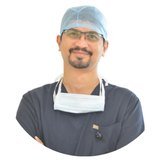
Breast cancer surgery with Dr Prabhat Yaji
Dr Prabhat Yaji is a surgical oncologist in Bengaluru. He plans and performs breast cancer surgery at ARC Cancer Hospital, Wilson Garden, from breast-conserving surgery to mastectomy, reconstruction and lymph node surgery.
He completed his MS in General Surgery at Vijayanagar Institute of Medical Sciences, followed by his MCh in Surgical Oncology at Kidwai Memorial Institute of Oncology, one of India’s dedicated cancer referral centres. You can read more about his training and practice.
Breast cancer surgery is one of the areas he works in most often. He sees patients at very different points in their journey: a young working professional from Koramangala who has just felt a lump for the first time, a mother from Indiranagar whose mammogram has flagged something unexpected, or a patient coming back for planned surgery after weeks of scans and biopsies.
Each case is planned around the tumour’s biology, its stage and the patient’s own priorities. That planning draws on training in a dedicated surgical oncology programme, not general surgery alone.

Understanding breast cancer
Breast cancer starts when cells in the breast tissue, usually in the milk ducts or lobules, begin to grow abnormally. It is the most commonly diagnosed cancer among Indian women.
Finding it at an earlier stage usually means more surgical options and better long-term results. The WHO breast cancer fact sheet explains why early diagnosis and timely evaluation matter so much.
Some breast cancers are slow-growing and hormone-driven. Others are more aggressive and need a faster, coordinated treatment plan. Knowing which type a patient has is the first step before any useful conversation about surgery can happen.
Signs and symptoms
- A new lump or thickening in the breast or underarm, painful or not
- A change in the size, shape or outline of the breast
- Skin changes over the breast: dimpling, puckering, redness or an orange-peel texture
- Nipple changes, such as pulling in, scaling or unexpected discharge
- Swelling in part of the breast, or swollen lymph nodes under the arm
Many breast changes are not cancer. But any new change that does not go away deserves a proper clinical check, not a wait-and-watch approach. Dr Yaji encourages patients not to delay a consultation out of fear. An early check is what keeps treatment options open.
How breast cancer is diagnosed
A thorough work-up usually starts with a clinical breast examination, then imaging. This is a mammogram, an ultrasound or both, depending on breast density and age.
If imaging shows a suspicious area, a core needle biopsy confirms the diagnosis. The biopsy also shows the tumour’s biological profile, including hormone receptor status (ER/PR) and HER2 status.
Depending on the stage, further tests such as a CT scan or PET-CT may be needed to see whether the disease is limited to the breast or has spread. Dr Yaji works closely with radiologists and pathologists, so the treatment plan is built on a complete picture of the disease, not just the first scan.
Surgical options for breast cancer
Surgery is central to breast cancer treatment for most patients. Today’s options are far more varied, and far more focused on keeping both function and appearance, than they were a generation ago. Dr Yaji’s practice includes:
The choice is never made in isolation. Dr Yaji talks through the tumour’s biology, the patient’s anatomy, how comfortable she feels with each approach, and how surgery fits with any chemotherapy, hormone therapy or radiation that a medical or radiation oncologist may recommend.
For patients coming from around Wilson Garden and Double Road, each option is discussed in detail at the first visit itself, so decisions are made with clarity rather than in a rush. Where minimally invasive techniques suit the case, the page on laparoscopic and robotic surgery explains how they work.
Recovery and life after treatment
Recovery from breast cancer surgery is not only physical. Arm movement and shoulder function are looked after with structured physiotherapy, especially after surgery on the underarm lymph nodes.
Regular follow-up continues for years after treatment ends: clinical examinations, periodic imaging and checks for any sign of the cancer coming back.
The emotional side matters just as much. Patients and families are encouraged to talk openly about body image, intimacy and worry around follow-up scans, and to seek counselling support where it helps. Dr Yaji’s care does not end when the operation is over. It continues through every follow-up visit that helps a patient return to a full and confident life.