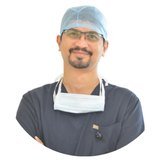
Cancer surgery beyond the common sites
Dr Prabhat Yaji is a surgical oncologist in Bengaluru who treats stomach, oesophageal, head and neck, soft-tissue and rare tumours at ARC Cancer Hospital, alongside his work in breast, colorectal and peritoneal cancers.
Cancer surgery covers many more sites than a few common ones, and each tumour type needs its own understanding of anatomy, staging and surgical planning. Dr Yaji’s approach comes from dedicated surgical oncology training at Kidwai Memorial Institute of Oncology and practice at KMC Manipal, BGS Gleneagles Global Hospitals and SPARSH Hospital, and now ARC Cancer Hospital.
Patients coming from around MG Road and Wilson Garden often arrive with one of these less-discussed cancers, and with questions a general search does not answer clearly.
His clinical focus includes gastrointestinal cancer surgery, covering oesophagectomy, stomach surgery and colorectal surgery, along with head and neck and breast cancer surgery. Across all of them, the same rule applies: an accurate diagnosis, careful staging, and a surgical plan matched to what the disease needs.

Stomach (gastric) cancer
Stomach cancer is often found late, because early symptoms such as indigestion, mild discomfort or a poor appetite are easy to dismiss. The National Cancer Institute’s stomach cancer guide covers its causes, symptoms and stages in more detail.
- Upper abdominal pain that does not go away
- Weight loss you cannot explain, or feeling full after small meals
- Vomiting, or blood in vomit or stool
These symptoms need prompt evaluation with an upper GI endoscopy and biopsy. Once cancer is confirmed, a CT scan guides treatment. In selected cases a diagnostic laparoscopy checks for disease on the lining of the abdomen before major surgery. Surgery ranges from partial to total gastrectomy with lymph node removal, often combined with chemotherapy before and after surgery depending on the stage.
Oesophageal cancer
Difficulty swallowing that slowly gets worse, especially with solid food, is the main symptom of oesophageal cancer. It often comes with weight loss.
The diagnosis is confirmed with endoscopy and biopsy, and CT and, where available, PET-CT are used for staging. Treatment usually combines chemotherapy, radiation and surgery (oesophagectomy) for disease that can be operated on. Because this treatment involves several organs, it is planned jointly with medical and radiation oncology.
Head and neck cancers
This group includes cancers of the mouth, tongue, throat and salivary glands.
- A mouth ulcer that does not heal
- Throat pain or hoarseness that does not go away
- Difficulty swallowing
- A lump in the neck
Diagnosis relies on clinical examination, a biopsy of the suspicious area, and a CT or MRI scan to check how far the cancer has grown and whether it has reached the neck lymph nodes. Dr Yaji’s surgical approach aims to remove the tumour completely while keeping speech, swallowing and appearance wherever it is safe to do so. Radiation therapy often follows, depending on the final pathology.
Soft-tissue and rare tumours
Soft-tissue sarcomas and other uncommon tumours need careful imaging before surgery, usually an MRI, and in most cases a biopsy to confirm the diagnosis before any surgical plan is made.
Why the biopsy comes first
Cutting straight into a suspected sarcoma without a proper biopsy can harm both the diagnosis and future treatment options.
Dr Yaji manages these tumours one by one, often with wide local excision that protects nearby function, and discusses them at a multidisciplinary tumour board because they are rare and vary so much.
A common thread: team decisions, made in stages
Across all of these cancers, the pattern of care is similar: a clear diagnosis through biopsy, accurate staging with the right imaging, and a treatment plan built together with medical oncology, radiation oncology, radiology and pathology colleagues.
Dr Yaji’s role is to bring precise surgical oncology to that shared plan, and to make sure patients understand not just what is recommended, but why, at every stage from diagnosis to recovery and long-term follow-up.
Recovery is planned around the person, not only the operation. Depending on the cancer, follow-up includes regular review and surveillance imaging, plus support with swallowing, speech, digestion or movement. Nutrition support and rehabilitation are often as important to long-term recovery as the surgery itself, so they are built into the plan from the start. Cancers that spread to the lining of the abdomen are covered on the peritoneal cancer and HIPEC page.