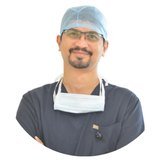
Colorectal cancer surgery with Dr Prabhat Yaji
Dr Prabhat Yaji is a surgical oncologist in Bengaluru who performs laparoscopic, robotic-assisted and open surgery for colon and rectal cancer at ARC Cancer Hospital, Wilson Garden.
Colorectal cancer, cancer of the colon or rectum, is one of the more common cancers in his practice. It is also one where timely surgery can cure the disease when it is caught at an operable stage. Gastrointestinal cancer surgery has been a steady part of his work since his MCh in Surgical Oncology at Kidwai Memorial Institute of Oncology.
He sees patients from across the city, including those travelling along Hosur Road and from Richmond Road. Many arrive after a colonoscopy has already found a suspicious growth.
The surgical approach is chosen for each tumour’s location and stage. The aim is the safest, most complete removal of the tumour for that person, not one default technique for everyone.

Understanding colorectal cancer
Colorectal cancer usually develops from polyps, small growths on the inner lining of the colon or rectum. Over years, some polyps can turn cancerous if they are not found and removed.
This is why screening matters, especially from about age 45 to 50 or for people with a family history. The WHO colorectal cancer fact sheet notes that regular screening finds the disease early and can prevent it by removing precancerous growths.
Once cancer has developed, three things decide the surgical approach and the need for chemotherapy or radiation: where the tumour is (colon or rectum), how deep it has grown, and whether it has spread to lymph nodes or other organs.
Signs and symptoms
- A change in bowel habits lasting more than a few weeks: diarrhoea, constipation or a change in stool
- Blood in the stool, or dark, tarry stools
- Abdominal pain, cramping or bloating that does not settle
- A feeling that the bowel has not emptied fully
- Weight loss you cannot explain, tiredness, or iron-deficiency anaemia
Many people put these symptoms down to diet, stress or a minor stomach upset, and delay getting checked. Dr Yaji’s view as a cancer surgeon is that it is far better to see a patient early with a harmless finding than late with an advanced one. Bowel symptoms that persist are always worth investigating properly.
How colorectal cancer is diagnosed
A colonoscopy with biopsy is the test that confirms the diagnosis. It lets the doctor see the tumour directly and take tissue samples.
Once colorectal cancer is confirmed, staging tests show how deep the tumour has grown and whether lymph nodes or other organs, most often the liver, are involved. These usually include a CT scan of the chest, abdomen and pelvis, and for rectal cancer an MRI of the pelvis. A CEA blood test (a tumour marker) gives a useful starting value.
This staging work-up is essential before any surgical plan is final. Dr Yaji goes through it with every patient so they understand exactly what the operation is meant to achieve.
Surgical options for colorectal cancer
Removing the tumour with surgery is the main curative treatment for most colorectal cancers. The exact operation depends on where the tumour is: a right or left colectomy for colon cancer, or an anterior resection for rectal cancer. For rectal cancers very close to the anal canal, an abdominoperineal resection is sometimes needed, though less often today.
For locally advanced rectal cancer, chemotherapy and radiation are often given before surgery, planned jointly with medical and radiation oncology colleagues. When colorectal cancer has spread to the lining of the abdomen, it is assessed as a peritoneal surface malignancy, an area of focused work for Dr Yaji.
Recovery and follow-up
Recovery after colorectal surgery includes a gradual return to normal bowel function and guidance on diet. Where a stoma has been made, patients get stoma care support, and reversal is planned at the right time for those who are suitable.
Long-term follow-up includes regular clinical review, periodic colonoscopy and imaging to watch for any return of the cancer, usually over five years. Dr Yaji also talks about diet, physical activity and screening for family members, because colorectal cancer has both a genetic and a lifestyle side that matters well beyond the operating room.