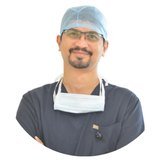
Minimally invasive cancer surgery with Dr Prabhat Yaji
Dr Prabhat Yaji is a surgical oncologist in Bengaluru who uses laparoscopic, robotic-assisted and open surgery for cancer at ARC Cancer Hospital, choosing the approach that gives the most complete and safest removal of the tumour.
Technique is a means to an end, not the end itself. But for the right patient and the right tumour, minimally invasive surgery can make the experience of cancer treatment much easier. Dr Yaji uses it across colorectal cancer, breast, gastrointestinal and other cancers wherever it is safe for the cancer.
Patients from Shivajinagar and around Lalbagh often ask him directly whether robotic surgery is “better”. The honest answer is that it suits some tumours and situations better. It is not better in every case.
The decision to operate laparoscopically, robotically or through an open cut depends on the tumour’s stage and position, and on what will remove it most completely and safely for that patient.

How laparoscopic and robotic surgery work
Laparoscopic surgery is done through several small cuts using a camera and long, thin instruments, instead of one large cut. The National Cancer Institute’s guide to cancer surgery explains that these smaller cuts mean a shorter recovery than open surgery.
Robotic-assisted surgery builds on the same idea. The surgeon controls a robotic system that gives a magnified, three-dimensional view and instruments that bend further than the human wrist. This is especially useful in narrow, deep spaces such as the pelvis.
In both approaches the surgeon is in full control the whole time. The technology helps with precision and vision. It does not operate on its own.
When a minimally invasive approach is advised
- Early to moderately advanced tumours that can be removed completely and safely this way
- Colorectal cancers, especially rectal cancers that need precise work in the pelvis
- Selected gynaecological cancer operations, as part of a staged team plan
- Some stomach and other abdominal tumours, where anatomy and staging allow
- Diagnostic and staging laparoscopy, to check the extent of disease before a larger operation
Not every tumour suits a minimally invasive approach. Very large tumours, disease involving several organs, or situations where limited access would put cancer safety at risk often need open surgery instead. Dr Yaji’s advice is always based on the most complete and safest removal of the tumour. The size of the cut comes second to that goal.
Benefits for patients
- Smaller cuts, which usually mean less pain after surgery
- A shorter hospital stay for many operations compared with open surgery
- A faster return to normal activity and daily routine
- A lower risk of wound problems in carefully selected patients
- A clearer view in tight spaces, which supports precise surgery that protects nerves and nearby structures
What to expect
Staging first
Scans and tests confirm that a minimally invasive approach suits this tumour and its extent.
Small cuts
Instruments go in through cuts usually 5 to 12 mm long. For robotic surgery, Dr Yaji operates from a console that turns his hand movements into precise instrument movements.
Complete removal
The tumour and surrounding tissue, including lymph nodes where needed, are removed whole for the pathologist to examine.
Recovery
Recovery is usually faster than after open surgery. The exact time depends on the operation, your health and any further treatment such as chemotherapy.
A balanced view
Patients deserve an honest conversation about technique, not a sales pitch for the newest technology.
Robotic and laparoscopic surgery are valuable tools, used routinely where they serve the patient well. But the cancer principle always comes first: complete, safe removal of the tumour, by the approach that best suits that disease, in that patient, at that stage.