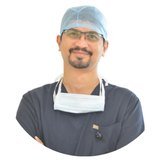
Thyroid cancer surgery with Dr Prabhat Yaji
Dr Prabhat Yaji is a surgical oncologist in Bengaluru who evaluates thyroid nodules and performs thyroid cancer surgery, including thyroidectomy and neck dissection, at ARC Cancer Hospital, Wilson Garden.
Thyroid nodules are very common, and most of them are not cancer. Even so, finding a lump in the neck is understandably worrying. Dr Yaji regularly sees patients from Brigade Road, Church Street and Residency Road who have been referred after a scan picked up a thyroid nodule, and who need a clear, step-by-step check to know whether surgery is needed at all.
Thyroid surgery needs great care because the parathyroid glands and the recurrent laryngeal nerve lie right next to the thyroid. In Dr Yaji’s practice, every thyroidectomy is done with close attention to these structures. Protecting the voice and calcium levels matters as much as removing the disease. His surgical oncology training at Kidwai Memorial Institute of Oncology shapes this approach.

Understanding thyroid cancer
The thyroid gland sits at the front of the neck. The most common type of thyroid cancer is papillary thyroid cancer, which usually does very well with the right treatment. The National Cancer Institute’s thyroid cancer guide notes that papillary and follicular cancers can usually be cured.
Other types, such as follicular, medullary and, rarely, anaplastic thyroid cancer, behave differently and need tailored treatment. Not every nodule is cancer, and not every thyroid cancer needs the same operation. That is exactly why a proper evaluation comes before any decision.
Signs and symptoms
- A lump or swelling at the front of the neck, often noticed by the patient or a family member
- Hoarseness or a change in voice that does not go away
- Difficulty swallowing, or a feeling of tightness in the throat
- Swollen lymph nodes in the neck
- Often no symptoms at all: the nodule is found by chance on a scan done for another reason
Because so many nodules are found by chance and cause no symptoms, patients are often unsure whether to worry. Dr Yaji’s first job is to separate the nodules that only need monitoring from those that need a needle test or surgery.
How thyroid nodules and cancer are diagnosed
Evaluation starts with a neck ultrasound. It shows the nodule’s size, shape and any features that may suggest cancer.
Nodules with suspicious features are usually sampled with fine needle aspiration cytology (FNAC). The result is reported in standard categories that guide the next step. Thyroid function tests show whether the gland is overactive or underactive.
For nodules that are cancer, or very likely to be, further staging, including a check of the neck lymph nodes, decides how much surgery is needed. Dr Yaji explains each step in plain language, because the terms alone, FNAC categories in particular, can be confusing and worrying without a proper explanation.
Surgical options for thyroid cancer
Surgery is the main treatment for thyroid cancer. How much surgery is needed depends on the type and stage of the disease.
Depending on the pathology, radioactive iodine treatment may be advised after surgery. This is coordinated with a nuclear medicine or endocrinology specialist as part of the overall plan.
Recovery and follow-up
After a total thyroidectomy, most patients take thyroid hormone tablets for life, with regular blood tests to check thyroid function and, where relevant, calcium levels.
Follow-up also includes regular neck examination and, for cancer patients, thyroglobulin blood tests and periodic imaging to watch for any return of the disease. The outlook for most thyroid cancers, especially papillary thyroid cancer, is very good with the right treatment and follow-up. Dr Yaji makes a point of explaining this clearly, because the word “cancer” can cause far more fear than this particular disease usually warrants.